A Typical Fever or Something More Serious? Find Out Now!
Generally, a fever is considered a temperature of 100.4°F (38°C) or higher. Mild fevers are very common in kids and don’t always mean something serious is going on.
A fever is a sign that your child’s body is fighting off an infection. In most cases, your little one will feel out of it and run hot for a few days, then get back to their normal (rambunctious?) self once the infection is gone. Kids are known to fight off several infections every year, so fevers might even become pretty commonplace in your household.
But as a parent, watching your child lay on the couch while burning up makes you feel helpless and scared. It’s tough to know when a fever is just business as usual or the sign of an emergency that requires medical treatment stat. Here at KEEP>GOING First Aid Kits as parents of four little ones, we understand that incessant worry.
To put your mind at ease, we’ve developed a list of scenarios that just might require you to seek medical treatment for your child’s fever. Review this list before you make the decision to visit the ER or your pediatrician.
Your child has trouble breathing or severe pain. This could be a sign of a serious lung infection or an infection they simply can’t fight off on their own. Your little one might need a round of antibiotics to make it go away.
There’s a rash or bruise. If your child’s fever is accompanied by a dark rash, large bruise, or other skin abrasions, it may warrant a doctor’s visit. This could be a sign of a nasty virus or bacterial infection that needs further treatment.
Your child has a preexisting condition. If your child has a condition or is taking medication that weakens their immune system, it’s safer to just go see a doctor any time they experience a fever.
The fever is over 102 degrees Fahrenheit. While this may simply mean your child’s body is working overtime to combat the infection, an extremely high fever like this should be checked out.
It’s been more than three days. If your child’s fever lasts longer than two to three days, it may just be a stubborn infection, but it’s best to take them in for a professional opinion just in case.
They are younger than three month. When your infant is only 0-3 month old you should call your doctor with a rectal temperature over 100.4 degree Fahrenheit or higher.
For mild fevers, focus on comfort: keep your child hydrated, dress them in light clothing, and let them rest. Fever reducers can help with discomfort, but the goal isn’t always to eliminate the fever—sometimes it’s just helping your child feel better while their body does the work.
If your child seems very irritable and extremely tired, a trip to the doctor may also be in order. Use your intuition as a SuperMom, you know your child best. If something seems off about your child’s behavior or symptoms, the only way to stop worrying is to call or make an appointment with your pediatrician.
Many health insurance plans now include telehealth benefits that let you talk to a doctor by video or phone — often at little to no cost to you for non-emergency concerns like fevers and minor symptoms, but be sure to check your specific plan’s benefits to see what’s covered.
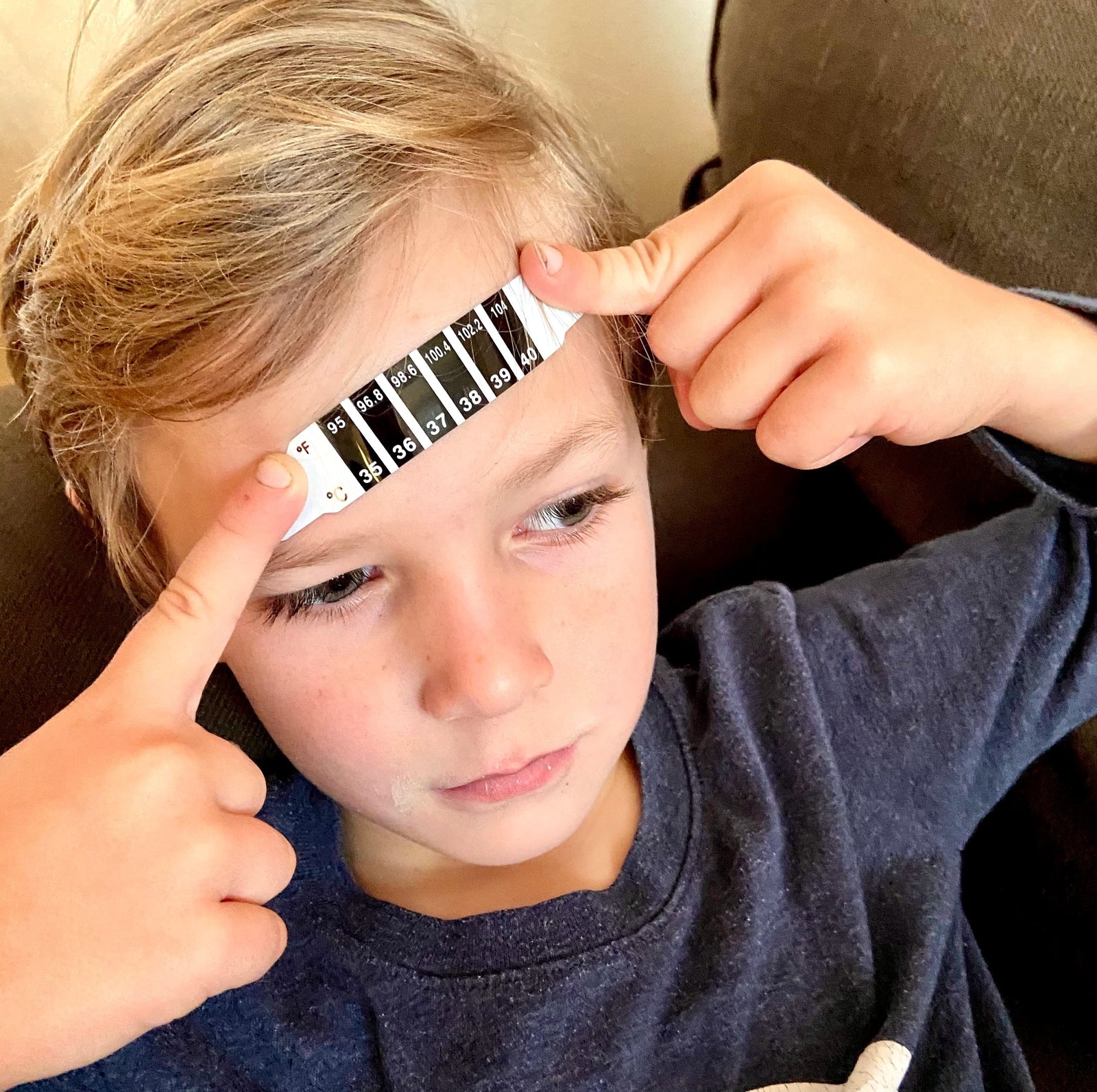
Fevers can be scary especially when you're not at home! So you don't have to rely on the "hand on forehead" measure method when on the go, we included single use Temperature Strips in every GoKit and Trauma First Aid Kit - our SuperKit.
GET 10% OFF IMMEDIATELY
Subscribe to our Newsletter and receive a 10% coupon when you enter your e-mail address.