





Why Do Kids Get More Nosebleeds in Fall—and What Should You Do?
Why Do Kids Get More Nosebleeds in Fall—and What Should You Do?
One minute your kid is getting ready for school, running around the playground or jumping into a pile of leaves.
The next?
“MOM! My nose is bleeding!”
And somehow one tiny nose can produce what looks like an alarming amount of blood.
Fortunately nosebleeds are incredibly common in kids, and most you can handle at home with a few simple First Aid steps.
And if it feels like you start seeing more of them when fall rolls around, there are some good reasons why.
Why Do Kids Get More Nosebleeds in the Fall?
Fall itself doesn't necessarily cause nosebleeds. It's everything that tends to come along with it.
Drier Air
As the weather cools and the air gets drier—especially once indoor heat comes on—the delicate lining inside the nose can dry out and crack.
And there are lots of tiny blood vessels sitting very close to the surface inside a child's nose.
Dryness + tiny blood vessels = a nose that's much easier to make bleed.
Fall Allergies
If your child's fall involves lots of sniffing, sneezing, and itchy noses, all that rubbing and blowing can irritate the inside of the nose.
Back-to-School Colds
Then come the runny noses.
Frequent nose blowing, wiping, and rubbing during a cold can make an already irritated nose even more likely to bleed.
Nose Picking
We're parents. We know.
Dry noses get crusty. Crusty noses get picked.
And nose picking is one of the most common triggers for childhood nosebleeds.
So while there isn't one official “nosebleed season,” dry air, allergies and colds can create the perfect storm for more bloody noses. The American Academy of Pediatrics lists dry air, colds, allergies, rubbing, picking and forceful nose blowing among common causes of childhood nosebleeds.
How to Stop a Kid's Nosebleed
Remember:
Sit. Lean forward. Pinch. Ten minutes.
1. Sit Them Up
Have your child sit upright and try to keep them calm.
Nosebleeds look dramatic. If you're calm, it helps reassure them that you've got this.
2. Lean Forward
If you remember only one thing from this article, make it this:
Forward. Not backward.
Tilting backward lets blood run down the throat, where your child can swallow it. Swallowed blood can irritate the stomach and sometimes cause vomiting.
3. Pinch the Soft Part of the Nose
Using your thumb and index finger, pinch the soft lower part of the nose, below the hard bony bridge.
Not the bridge itself.
You're trying to put direct pressure on the area where most childhood nosebleeds begin.
4. Hold It for a Full 10 Minutes
This is the part that's harder than it sounds:
Don't peek.
Keep continuous pressure for 10 full minutes.
Checking after two or three minutes can disturb the clot that's beginning to form and start the bleeding again.
The American Academy of Pediatrics recommends maintaining pressure for a full 10 minutes. If the nose is still bleeding, repeat the pressure.
The Little First Aid Supply Most Parents Don't Know Exists: Nosebleed Plugs
Here's one of those supplies you might not think to put in a family First Aid Kit...
until the day you need one.
Nosebleed plugs.
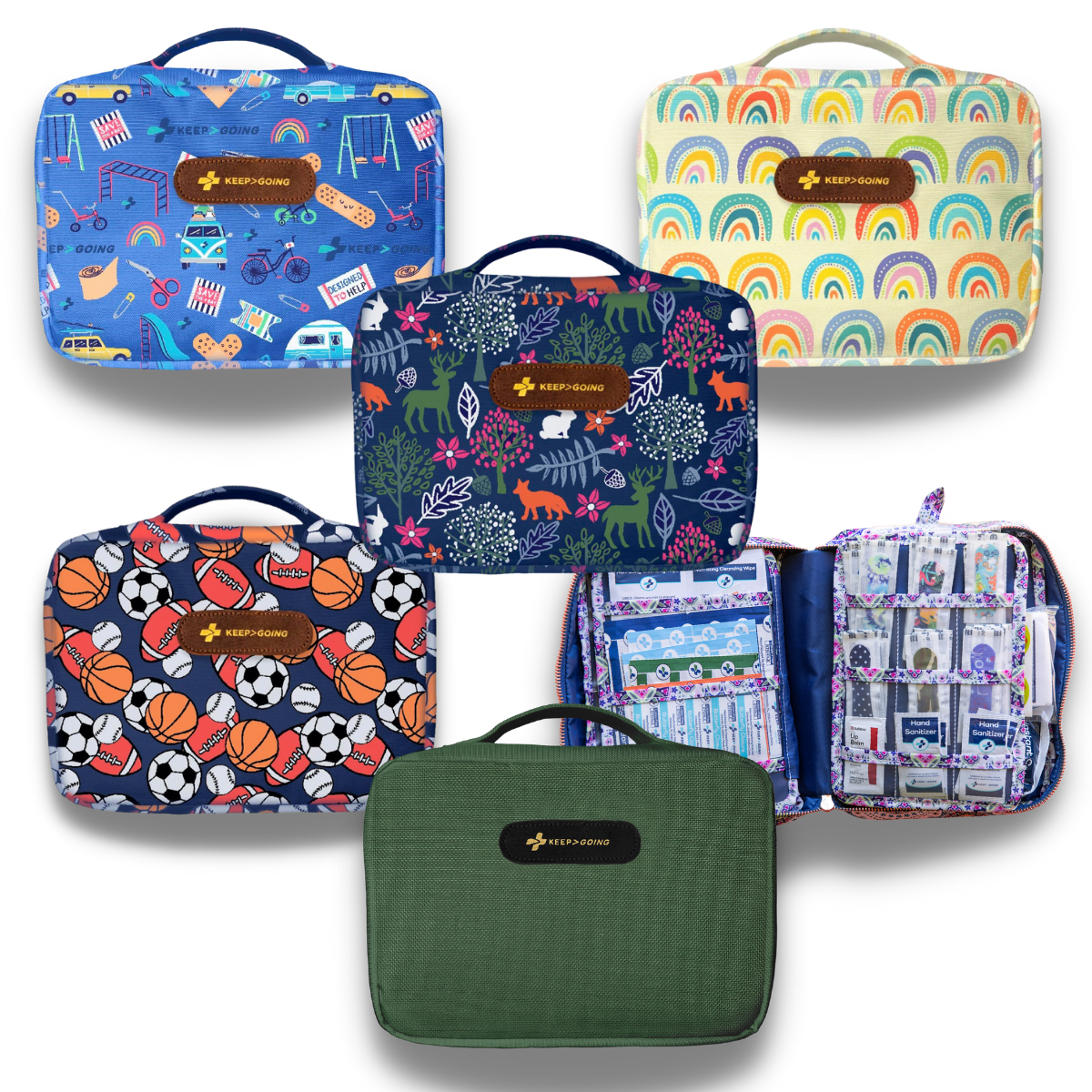
They're one of the specialty First Aid supplies we include in both our KEEP>GOING GoKits and SuperKits—right alongside things like our tick remover, burn gel and other items we wanted in our own family's First Aid Kit.
Instead of grabbing handful after handful of tissues, a nosebleed plug gives you a small, absorbent material designed specifically to sit inside the nostril while you deal with the bleed.
They're especially handy when a bloody nose happens somewhere inconvenient—which, with kids, is usually exactly when it happens.
The playground.
Soccer practice.
The car.
An airplane.
A hotel room.
Basically anywhere except next to a fully stocked bathroom.
How to Use the Nosebleed Plugs in Your KEEP>GOING First Aid Kit
First, the plug doesn't replace the basic nosebleed steps: head forward + pressure are still important.
Here's how to use it:
1. Sit Up and Lean Forward
Have your child sit upright with their head tilted slightly forward.
2. Find Which Nostril Is Bleeding
You generally only need the plug in the nostril that's actually bleeding.
3. Gently Insert the Nosebleed Plug
Take a nosebleed plug from your GoKit or SuperKit and gently place it into the bleeding nostril.
Don't force it or push it far up into the nose.
It should sit comfortably inside the opening of the nostril where it can absorb the blood.
4. Pinch and Hold
Gently pinch the soft part of the nose around the plug and maintain steady pressure.
Then comes that same important rule:
Give it time.
Hold the pressure continuously rather than checking every minute.
The absorbent plug helps contain the blood while you're applying pressure—which also means fewer wads of bloody tissues and a little less drama for everyone involved.
5. Remove It Gently
Once the bleeding has clearly stopped, slowly and gently remove the plug and throw it away.
If it doesn't release easily, don't yank it out. Moisten it slightly with saline or water first and remove it gently.
And then...
KEEP>GOING.
What NOT to Do During a Nosebleed
There are a few old-school nosebleed tricks worth retiring.
Don't tilt their head backward.
Don't have them lie flat.
Don't keep releasing their nose to see whether the bleeding has stopped.
And don't just keep stuffing loose tissues into the nose. The goal is steady pressure—not continually replacing blood-soaked tissues.
A purpose-made nosebleed plug is different from improvising with random tissues: it's specifically designed for nasal use. But direct pressure remains the important part of controlling an ordinary nosebleed.
How Can You Help Prevent Nosebleeds?
If your child seems particularly prone to nosebleeds during dry weather, the goal is often to keep their nasal passages from becoming so dry and irritated.
A few things can help:
-
Use a cool-mist humidifier if the air inside your home is dry.
-
Try a simple saline nasal spray to add moisture.
-
Encourage gentle nose blowing.
-
Keep fingernails trimmed.
-
Discourage nose picking as much as humanly possible.
-
Talk with your pediatrician if allergies or frequent congestion seem to be contributing.
For children with recurring nosebleeds, your pediatrician may also recommend additional ways to keep the inside of the nose moisturized.
When Is a Nosebleed More Serious?
Most childhood nosebleeds aren't emergencies.
But get medical advice if the bleeding won't stop despite proper pressure, happens very frequently or you're concerned.
Seek care sooner if your child:
-
Is losing a large amount of blood
-
Becomes pale, weak, sweaty or faint
-
Has difficulty breathing
-
Has unusual bruising or bleeding elsewhere
-
Has something stuck inside the nose
-
Has significant bleeding following an injury to the head or nose
The AAP advises seeking medical attention when significant bleeding persists despite proper direct pressure.
The Nosebleed Rule Worth Teaching Your Kids
Nosebleeds can look scary.
But knowing what to do can turn a potentially frantic moment into a pretty manageable one.
Teach your kids:
Sit up.
Lean forward.
Pinch the soft part of your nose.
And don't peek for 10 minutes.
And because nosebleeds don't usually wait until you're conveniently at home, keeping the right supplies nearby helps, too.
That's why our GoKit and SuperKit include nosebleed plugs along with the First Aid basics families reach for every day. Because sometimes being prepared isn't about having more stuff.
It's about having the right stuff when you need it.
Prepared for the nosebleed. Present for everything else.
KEEP>GOING.
This article is for general educational purposes only and isn't a substitute for medical advice from your child's healthcare provider. Always follow the instructions included with First Aid products and contact a healthcare professional if you have concerns about your child's bleeding.
